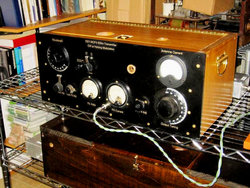
A replica 1921 CW and Heising modulated AM transmitter constructed by Brian Justin, WA1ZMS. [Brian Justin, WA1ZMS, photo]
As he’s done in years past, Brian Justin, WA1ZMS, of Forest, Virginia, will commemorate what may have been the first radio broadcast [from Brant Rock, Massachusetts] to include speech and music by experimenter Reginald Fessenden on Christmas Eve 1906. Justin will fire up his vintage-style transmitter operating on 486 kHz under Experimental license WI2XLQ to mark the 112th anniversary of Fessenden’s accomplishment. Justin will begin his transmission on December 24 at 1700 UTC and continue until December 26 at 1659 UTC. [Full story]
Townsend amateur Steve Cloutier, WA1QIX, and others are spearheading the third annual AM Rally in February. The event is sponsored by Radio Engineering Associates (REA), in cooperation with ARRL.
From the ARRL Hq. web site:
The third annual AM Rally is on the near horizon — just about 6 weeks away — getting under way at 0000 UTC on February 2 and continuing until 0700 UTC on February 4. The event aims to encourage the use of AM on 160, 80, 40, 20, 15, 10, and 6 meters while highlighting the various types of AM equipment in use today. The event is open to any and all radio amateurs running AM using any type of radio equipment — modern, vintage, tube, solid-state, software-defined, military, boat anchor, broadcast, homebrew, or commercial.
New England Amateur Radio, Inc. is pleased to offer as part of the school vacation-week workshops, a radio Technician license class course for adults, children, and child-parent pairs to facilitate their successful completion of the FCC radio license test on December 21, 2018 from 9 AM to 12 noon. This course is appropriate for children 4th grade and up. Details are at <https://www.ne1ar.org/event/amateur-radio-course-for-kids-tech-5>.
New England Amateur Radio, Inc. is pleased to offer as part of the school vacation-week workshops, a radio Technician license class course for adults, children, and child-parent pairs to facilitate their successful completion of the FCC radio license test on December 20, 2018 from 9 AM to 12 noon. This course is appropriate for children 4th grade and up. Details are at <https://www.ne1ar.org/event/amateur-radio-course-for-kids-tech-4>.
New England Amateur Radio, Inc. is pleased to offer as part of the school vacation-week workshops, a radio Technician license class course for adults, children, and child-parent pairs to facilitate their successful completion of the FCC radio license test on December 19, 2018 from 9 AM to 12 noon. This course is appropriate for children 4th grade and up. Details are at <https://www.ne1ar.org/event/amateur-radio-course-for-kids-tech-3/>.
The South China Morning Post carried this story, “China and Russia band together on controversial heating experiments to modify the atmosphere” December 17, 2018, describing the continuing military “race to control the ionosphere.” The experiments are similar to the US program’s super-power High-Frequency Active Auroral Research Program ( HAARP) transmitters in Gakona, Alaska.
Nick Mello, KC1DKY writes on the fox-hunting list on December 14, 2018 at 1:37 PM:
The KC1DKY fox is hiding in Billerica on conservation land. Fox is on 146.565 MHz. Send a DTMF of 1 to activate the fox. If the fox does not seem to be responding, send a couple DTMF # and then a 1 to possibly whack it back into shape. The fox will signal for 30 seconds and be silent for 15 sec, and repeat for 15 minutes. The fox is located around a third of a mile from the trail head and about 20 ft or so in from the trail. Don’t forget to sign the log book in the plastic bag next to the fox. I recommend some boots, as there are a few mucky spots. And please, as it will be the topic of my daughter’s Girl Scout project, try to avoid stepping on the princess pines, which are very short plants, 2 to 3 inches tall, which look more like fern frons than pine trees. https://en.wikipedia.org/wiki/Lycopodium_obscurum
While not endangered like lady slipper flowers, they are protected…and they are found all along this particular trail.
Finally got my 160m inverted-L loaded up on 474.2 kHz using the variometer and impedance transformer I built. I can only get about 1 mw out of my K3S so real QRPP! So far only W1XP hears my flea signal (-20 SNR) but I’m hoping for more reports after dusk. I’ll keep the signal on both Friday and Saturday nights and would appreciate any reports.
IARUMS has received reports of short “beeps” exactly 1 second apart, as well as frequency hopping between 10,108 and 10,115 kHz and 18,834 and 18,899 kHz. The signals are believed to emanate from a site near Chicago associated with an FCC-licensed experimental operation involved with low-latency exchange trading on HF (see “Experiments Look to Leverage Low-Latency HF to Shave Microseconds off Trade Times <http://www.arrl.org/news/experiments-look-to-leverage-low-latency-hf-to-shave-microseconds-off-trade-times>”). Although Amateur Radio is secondary on 30 and 17 meters, Experimental licenses may not interfere with Amateur Radio operations.”
YCCC member Fred Coelho, WX1S writes on the YCCC reflector:
“More on our 30 meter intruder. I’m not sure if this is what we were hearing last month but a signal (beep) at 1 second apart sounds about right. I copied this from the latest ARRL letter.”
While Field Day is officially an “Operating Event” and not a “Contest,” we still have “Points” to score.
Clubs and ARES teams operating in Field Day can collect points for making contacts of course, same as any Contest. But there are some points specifically available for ARES/NTS/RACES related activities at Field Day.
Specific rules and points vary from year to year, so check the annual Field Day rules download, usually available early in the new year at http://www.arrl.org/contest-rules. Look for the “Bonus Points” section and see what is on offer this year. Some Bonuses are available to all stations, others only to Club and EOC stations, others to those on specific kinds of emergency or natural power.
Contacts and “Multipliers”
The basic points are the count of stations contacted, per band, per mode, multiplied by “the Multipliers.” Multipliers are a common concept in Contesting but for the casual conversationalist or public-service operator: Multipliers are conditions which increase the points per contact by a multiple.
Bands – So the first way to get multiple points for a near-by, easy to work station is to plan to work then on every band open on the day.
Modes – And then recontact them on each of Voice, Morse/CW, and Digital text. (Note: all voice modes are considered equivalent. On HF below 10m, this isn’t an issue, since we wouldn’t use AM for efficient context or emergency operation, so it’s SSB. (But it’s important to remember that at 10m and up, FM Voice and SSB voice count the same and would be duplicates if the same station is worked both ways.) Likewise all non CW/Morse digital contacts are considered a single mode for contest and duplicate purposes — working the same remote station on both PSK31 and RTTY on the same band would dup, but on different bands would be OK. (Contest Branch will probably have to rule how simplex digital voice counts, as that should have good range, but is it Voice or Digital?)
Traditionally, Morse Code (“CW”) contacts count 2x in a context compared to Voice contacts because they take longer to make. (No, not because the whitebeards value them more, this dates from before the Code Wars.) Modern Digital has also been a 2x multiplier to encourage its use, and as it can be slow if hand typed. So adding some Digital modes to your Field Day stations is good too.
Power The other Multiplier is the Power Multiplier. Stations operating at medium or low power are rewarded by scoring more points per contact, compared to the QRO home stations with the max legal linear amp. (Typically, 1x for power > 150W; 2x for upto 150W; and 5x for upto 5W., but check the annual rules and score sheet for latest.)
One point of advice: Do any Bonus contacts such as “Alternate/Solar/Natural Power” contacts early in the operating period, as your site’s regular, likely higher power stations will work the strongest nearby stations fairly quickly as they open each band, and a Duplicate contact on same Band/Mode likely won’t count, so “have dessert first”. A Satellite QSO isn’t as urgent, as long as a single satellite station is a Free station and treated as a separate band. They count as QSOs normally as an extra band and a big bonus for doing at least one! (Note: Must be Earth-Sat-Earth exchange, not just a packet download. Limit one QSO per single-channel FM sat to avoid congestion.)
Move them Up – HF stations and VHF stations should have easy reference to a list of what other bands and modes are (a) being worked now and (b) possible at this site, in case a station contacted asks — and if they’re not in a hurry, you can ask them what else they have, and refer them.
VHF+ Agility If your VHF+ station has a multiband multimode radio and antennae, you can move a 2m FM/SSB contact down to 6m SSB/CW/FM and up to 440 SSB/CW/FM, and where else both stations have available. Just be sure you don’t have two stations on FM and SSB on the same band at once! (Remember, no points for repeater contacts. Check detailed rules for “spotting” and “sked” rules.)
How many bands can you support? If there are 900MHz or 1.2GHz repeaters in the area, the mobile rigs and HTs can also be used for Simplex for Field Day. If you set up a good antenna and base, other nearby hilltop stations will be able to work you. If a really good hilltop, get that one club member that does the microwave contest to bring the 2.4/5/10 GHz hilltopping kit, and plan to meet other microwave-capable hilltop clubs on e.g. 440 SSB or FM Calling.
Section FD Message(s) – This has typically included originating a message from the FD site to the ARRL Section Manager (SM) and/or to the ARRL ARES Section Emergency Coordinator (SEC) noting your location, number of participants, and number of ARES-enrolled operators attending.
Handling – Some years, there are additional points available for “handling” formal traffic (other than your station’s SM/SEC message above) — this can be originating third party greetings traffic from visitors, or relaying traffic from one NTS net to another NTS net, or delivering messages to the final recipient. This is particularly easy if the SM or SEC is visiting your site at net time: collect their messages for them from the NTS Net and hand them a stack of hard copy!
(Note that the above messages must enter and leave the Field Day site on Amateur Radio Radio-frequency — Internet access to the NTS Bulletin Board via commercial provider does not count.)
W1AW Bulletin – Another kind of message handling is copying a bulletin transmitted by W1AW (and K6KPH west-coast) as a “Code Practice” and reception test bulletin. The transmission schedule will be in the annual information packet. Copy (transcribe) the bulletin off-air and provide a copy with your scores packet.
ARES & PIO Functions
Various things your club’s Amateur Radio Emergency Services team would practice in a Simulated Emergency Test are valuable to Field Day as a more public demonstration of emergency capability too, and thus in the gamification of the Operating Event as a quasi Contest, are awarded points.
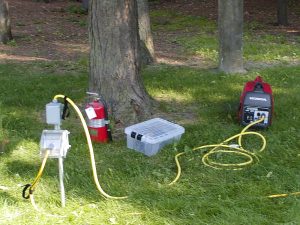
Generator with grounded distribution, and fire extinguisher. (W1BOS; photo: N1VUX)
100% Emergency Power bonus applies if all transmitters are on emergency or natural power. Typically this only applies to the transmitters; running lights and computers and the coffee pot on commercial power is usually acceptable. (In most years, a town or agency EOC operating in Class F can also claim this bonus if the EOC has a big enough generator that the town tests on a weekday but won’t let the EOC use for a voluntary ham drill on the weekend.)
Site Visitation – Visits by Elected town officials and/or a representative of a local Served Agency (whom the club or local ARES team has a relationship with) “as a result of an invitation”.
Note that the police patrol does not qualify, unless the patrol officer is also town Emergency Manager, was invited, and is patron recipient of ARES/RACES services. (Alas it specifically says Elected, so hired, professional Town Managers only qualify if there’s a ARES/RACES relationship.) Also, ARRL Leadership & Staff visits also don’t earn points; we encourage those for reasons other than points!
Safety Officer – You’ll want a Safety Officer anyway, but if they complete the Field Day packet’s Safety Check List, they earn points too!
Public Information Officer / PR
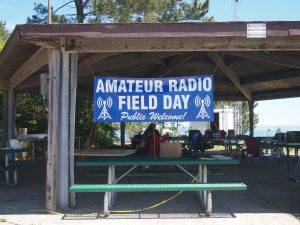
Sign clearly saying Amateur Radio Field Day – Public Welcome (N1ERC, photo: N1VUX)
Your Club Public Information Officer (PIO) can provide Public Relations help for Field Day, and can get ARRL handouts through the Section Public Information Coordinator (PIC). See Public Information section for more information. Typically the Government Liaison gets a Proclamation or two; if the Section Manager brings them by, get photos of them at your site!
Public Location (a requirement for Class A operation, bonus also available for B and F) – The intent is for amateur radio to be on display to the public. So be welcoming the public with signs that look inviting. Take photos for both later publicity and to document that it was public.
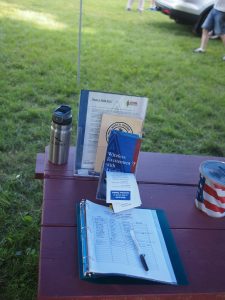
Minimalist Information Table (photo: N1VUX)
Public Information Table: The purpose is to make appropriate handouts and information available to the visiting public at the site. A copy of a visitor’s log, copies of club handouts or photos of the display and folders is sufficient evidence for claiming this bonus. It’s good to have a club Public Information Officer staffing the table or at least on lookout for wandering public too.
Press Release (W1BOS; photo: N1VUX)
Media Publicity – Getting the announcement of the national Field Day exercise into local press/media is important — so important that attempting it is rewarded. Save a copy of the your press release. Obviously, a clipping or video clip from the news or local TV magazine is even better!
Useful things the PR/PIO team can do to support the above –
Get Press Release carefully edited — to attract a newspaper or TV News editor’s attention! — and released early for Calendar section lead-times.
Push message origination at Booth, since it’s good for points (see under NTS heading) as well as public outreach.
Guided tours
PR or Central table whiteboard might be used to list States Worked, running tally score, Bonus’s scored, next scheduled event. PR or Central table signboards show what bands are in operations and current & authorized # of TX’s.
“Public Welcome” sign may need to be BIG if located in a remote corner of a larger parks: some FD sites wind up looking like a private event.
Outreach / Education / Licensing
Clubs often help prospective new hams earn their license with classes and/or VE exams, help hams upgrade by same, and help lapsed hams re-install their gear, renew their license, etc. See also Licensing/Education/Training and Youth sections.
GOTA – Get On The AIr The larger (A and F) stations get one free extra station called GOTA that operates with a second callsign, should they so choose. This station is for non-Ham guest operators to make contacts supervised by a control operator and for Hams to make contacts on bands/modes not within their license with a control operator or not within their usual operating practice or home station capability. The number of contacts per guest operator and points for each varies year to year, so check current rules. The GOTA station must have a GOTA Coach / Control Operator both for legal operation and for the terms of the bonus.
( Guest operators are permissible (with a control operator if not licensed for the band) on the main stations too, once they’ve achieved their GOTA quota, there’s just no specific bonus reward for those contacts. )
Youth Contact in progress with Control Operator / Coach. (W1BOS; photo: N1VUX)
Youth Participation – Youth Participation bonus is per Youth completing one or more contacts, apparently on either the GOTA or main stations. (They may be the control operator of the station or a guest operator.)
Educational / Demonstration – Varies per year – Demonstration of certain modes not eligible for QSO credit has been a bonus in prior years; more recently, a formal “Educational Activity” has been the bonus. See the annual packet for latest details. One local club has a seminar in the classroom of the building they get lights&coffee power from and use the restrooms in; another had a Soldering class.
There hasn’t been a bonus for holding a public VE exam session at Field Day but some clubs do it anyway. Whether that makes sense or not depends on your staffing and facilities! But be sure to invite visitors to classes and exams and exam and class participants to next Field Day, as they can GOTA even before they get licensed. (And if you’re having one, let the EMA FD Directory know, as we list the time each year for you.)
Time has flown by and Christmas is now only two weeks away. Apologies for not getting the October Traffic Report out until now. Your STM takes the full blame for that. Thanks to KC1CIC who has consistently provided the monthly report in a timely manner.
Winter conditions on the HF nets have been creeping in requiring us to get creative. For those who have the capability we have found 160 meters to work when we’re too close to copy one another on 80 meters. The MARI CW net has as it’s alternate frequency 1810 Khz. We always begin on 3565 Khz but move to 1810 Khz as needed. Sometimes even that doesn’t work well and where possible we try to find a 2 meter repeater for passing traffic.
MARIPN has its own problems with these conditions as the more distant stations are now heard, often requiring us to call the net on a nearby frequency. If you don’t find us on 3978 Khz, look around, usually up the band rather than down.
Heavy Hitters Traffic Net (HHTN) which meets on the Minuteman Repeater Network is accessable by Echolink and has experienced checkins from New York and Florida and probably other locations. If you can’t reach one of the repeaters give Echolink a try. Information is available on this website under a listing of nets.
I want to wish all a joyous holiday season and good health and happiness in 2019.
Randy Thompson, K5ZD, writes on the YCCC reflector:
There is a big event happening in ham radio today. The new release of WSJT-X is out and it will require a major migration for FT8 users. The new WSJT-X support for FT8 is incompatible with the old one. I don’t think we have seen this kind of dramatic change in a mode before. I installed the new version and got on 30 meters. Lots of signals, but not many decoding. But, this is day 1. I am sure people will upgrade quickly.
The current General Availability (GA) release is WSJT-X 2.0.0The FT8 and MSK144 protocols have been enhanced in a way that is not backward compatible with older program versions.
The new protocols become the world-wide standards starting on December 10, 2018, and all users should upgrade to WSJT-X 2.0 by January 1, 2019. After that date, only the new FT8 and MSK144 should be used on the air.
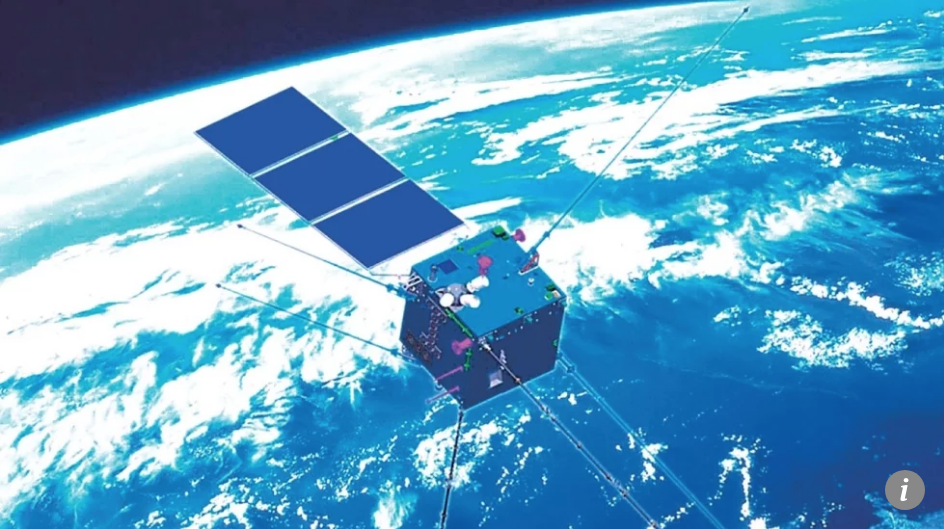
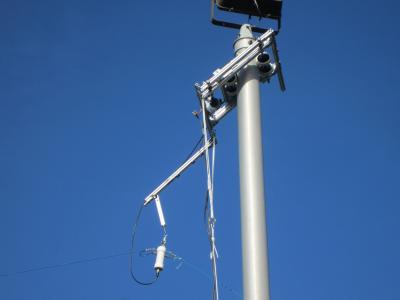
A fusion of robotics, amateur radio, and emergency service the Emergency Antenna Platform System (E-APS) is a tool for Amateur Radio operators (ARES, RACES) as well as First Responder organizations to turn any parking lot lamp post into an instant antenna tower.
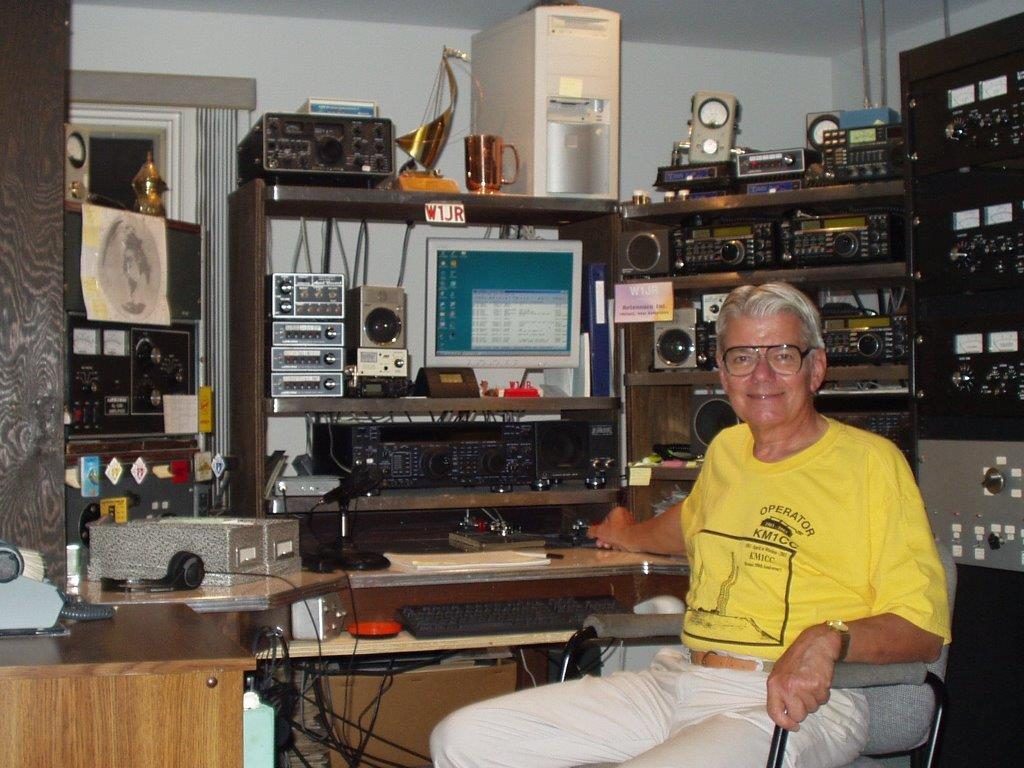
Congratulations to Joe Reisert, W1JR, on winning third place for his design of “The3/8-Wavelength Vertical for 20 Meters, a Hidden Gem”. Steve Ford WB8IMY described the “requirements for the 2018 QST Antenna Design Competition included an antenna for one or more bands between 2200 meters and 10 meters that could fit within a 30×50-foot area and be no taller than 30 feet above ground at any point.”
Nick Mollo, KC1DKY, writes on December 6, 2018 at 1:13 PM:
The KC1DKY fox is hiding in south west Billerica on conservation land. Fox is on 146.565MHz. Send a DTMF of 1 to activate the fox. If the fox does not seem to be responding, send a couple DTMF # and then a 1 to possibly whack it back into shape. The fox will signal for 30seconds and be silent for 15 sec, and repeat for 15minutes. The fox is located around a quarter to third of a mile from the parking area and about 30ft or so in from the trail. Don’t forget to sign the log book in the plastic bag next to the fox. I recommend some boots, as there are a few mucky spots on the trail. Dress warm too – cause baby it’s cold outside 😉
I’m in contact with the ARRL and am trying to gather information to feed them about how they can help get more of the younger crowd involved, and also retain others. I also have offered to yell from whatever mountains I can to help amplify any reasonable initiatives they come up with.
Target demographic is 26 and under. Like it or not, those of us in our 30s aren’t as young as we think we are.
We will be continuing our monthly ARES Net in November. The monthly ARES Net for November is Monday the 5th, at 8:30 PM on the MMRA Repeater system. For frequencies that will be linked into the ARES Net on the MMRA Network, please see the following link from the MMRA web site detailing the repeaters that will be linked in through Hub 1:
We look forward to your participation and remember, we are always looking for Net Controls to run the ARES Net.
As part of our relationship with MARS and our own situational awareness gathering we will be asking for any known infrastructure issues that you are aware of. The information must either be personally observed, or obtained “over the air” via amateur radio. Items considered to be infrastructure include but are not limited to: electrical power, water, medical facilities, sanitation, communications, and transportation. Examples of failure would be: small or large area power failure, water main breaks, hospitals’ ER closed, sewage issues, TV/radio station off the air (including public safety), interstate highway or major road closed. No known issues are just as important as reporting failures.
Additionally we are interested in relay of any weather information from airport ATIS/ASOS stations that you can directly receive via radio. These stations broadcast continuously in the 120.000 – 138.000 MHz frequency range using amplitude modulation. Information from the ATIS should include airport, temperature, altimeter (barometer), wind, precipitation, and visibility.
A list of stations with their frequencies and a map can be found at: https://www.faa.gov/air_traffic/weather/asos/?state=MA
A brief introduction to ATIS can be found at: https://www.vatsim.net/pilot-resource-centre/general-lessons/understanding-atis
We will have several interesting announcements for the net that evening and we look forward to everyone’s participation. Updates will be posted via email and on the Eastern Massachusetts ARES Web Site at http://ema.arrl.org/ares
Thanks for your continued support of ARES!
Rob Macedo, KD1CY
Eastern Massachusetts ARES Section Emergency Coordinator
Nick Mollo, KC1DKY, writes on the fox-hunting list:
The KC1DKY fox is once again out and about in Chelmsford on town land. Fox is on 146.565 MHz. Send a DTMF of 1 to activate the fox. If the fox does not seem to be responding, send a couple DTMF # and then a 1 to possibly whack it back into shape. The fox will signal for 30 seconds and be silent for 15 seconds, and repeat for 15 minutes. The fox is located about a quarter of a mile from the parking area and only about 30 ft. in from the trail. Don’t forget to sign the log book in the plastic bag next to the fox.